

By Christine Darg,
Jerusalem Channel
God’s redemptive “taking” of the righteous is our blessed hope. (Titus 2: 13) Because we live in a fallen world, the theological concept of being taken out of harm’s way is comforting.
Psalm 49:15 potentially illustrates a theme of divine rescue or “taking” of the righteous from death/Sheol, which some Christian interpreters connect to the concept of the Rapture, the hope of believers being caught up to be with the Lord.
The psalmist expresses confidence that God will intervene for the upright, leading to dominion or vindication “in the morning” (possibly alluding to resurrection or eschatological hope).
Some believers see Psalm 49: 15 as a typological or thematic parallel: God sovereignly delivering the righteous similar to the experiences of both Enoch and Elijah.
Let’s look at a Hebrew word study on “snatched”/”taken” (לָקַח, laqach) as supplied by my favorite website biblehub.com:
Root: לָקַח (lāqaḥ). This common verb appears over 900 times in the Hebrew Bible. Core meanings include: to take, seize, carry away, or fetch (physically or figuratively). To receive, accept, or bring into a relationship/place. Contexts: Taking a wife (marriage), taking plunder, taking hold of something, or God “taking” someone in judgment or blessing.
Psalm 49:15 conveys God actively receiving or taking the psalmist’s soul/nefesh (נַפְשִׁי) out of Sheol’s hand/power (מִיַּד־שְׁאוֹל). Some translators render it dynamically as “snatch” to emphasize deliverance.
Now here’s what I found profoundly interesting: this same root appears in Genesis 5:24 concerning Enoch who never died:
וְאֵינֶנּוּ כִּי־לָקַח אֹתוֹ אֱלֹהִים (“and he was not, for God took him” — lāqaḥ ‘ōtô ‘ĕlōhîm).
Enoch “walked with God” (הִתְהַלֵּךְ אֶת־הָאֱלֹהִים), then simply “was not” (disappeared from earth) because God took him. In the New Testament, Hebrews 11:5 interprets this event as Enoch being “translated” so he would not see death — a bodily removal to heaven.
While Jewish tradition often sees Psalm 49:15 as post-death vindication or resurrection hope, some Christian readings also see it foreshadowing the Rapture or the Church’s gathering to the Lord.
Hebrew poetry is rich and multilayered, so the “laqach” connection strengthens a theme of God’s intimate, rescuing action for the faithful.
Furthermore, Elijah’s bodily assumption to heaven in 2 Kings 2:1-18 uses the exact same Hebrew verb as Enoch’s translation!
לָקַח lāqaḥ — “to take”
2 Kings 2:1: “. . . when the LORD was about to take (laqach) Elijah up to heaven by a whirlwind…”
This is the identical root word used in Genesis 5:24 to describe the disappearance of Enoch: “Enoch walked with God, and he was not, for God took him (laqach).”
In both cases, God sovereignly grabbed the righteous person bodily from earth into heaven without death. HalleluYah!
This shared language (along with Psalm 49:15’s “He will take me”) creates a biblical pattern of divine body “snatching” or translation for the faithful — a strong picture often linked to the New Testament hope of the Rapture (1 Thessalonians 4:17).
Enoch and Elijah stand as the two clearest examples of living believers taken directly to heaven.
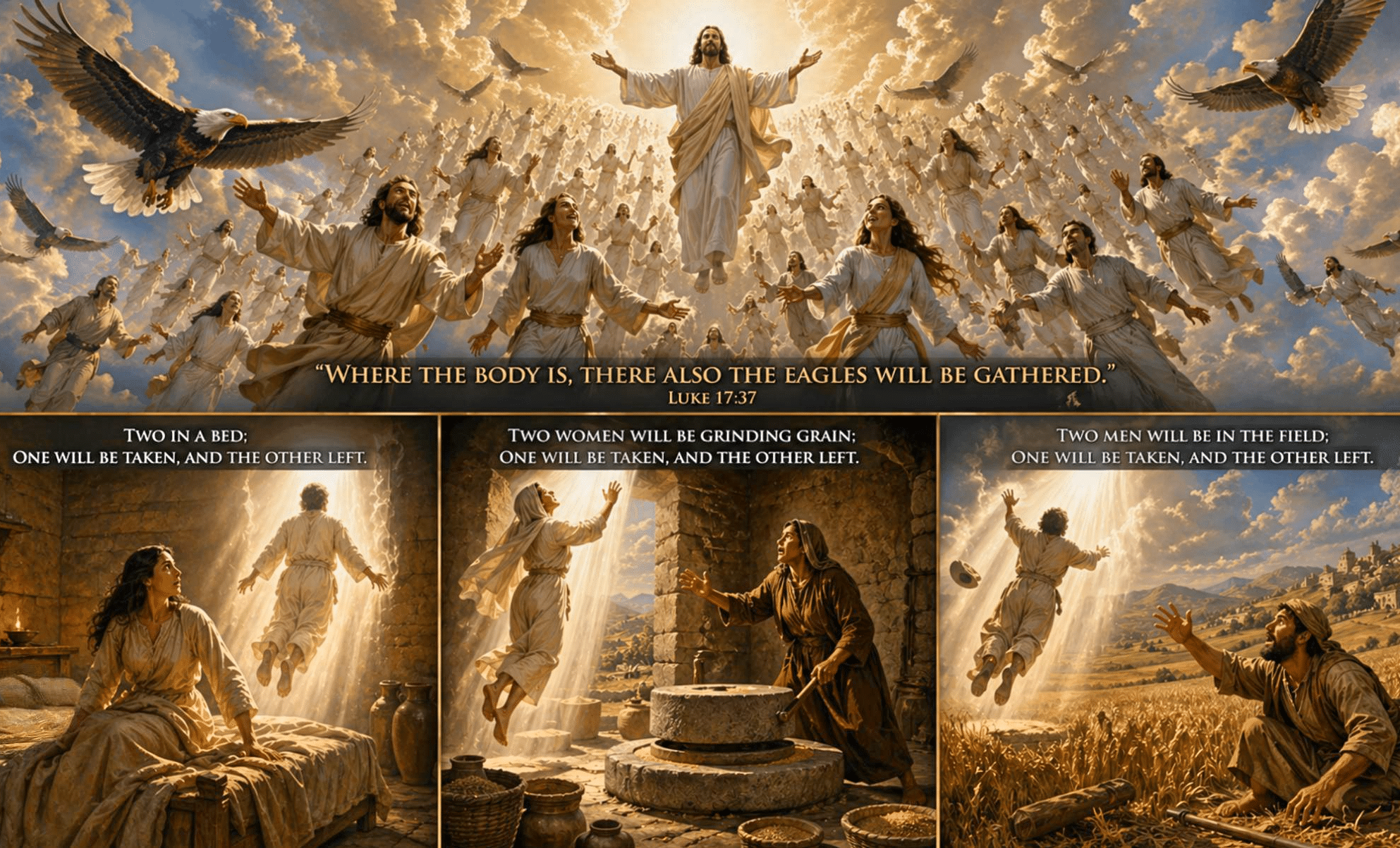
In the New Testament the key Greek verb for the Rapture is “harpazō” — translated “caught up” or “snatched up” (the origin of the word “rapture”).
Harpazō in 1 Thessalonians 4:17
“…we who are alive and remain shall be caught up (harpagēsometha) together with them in the clouds to meet the Lord in the air…” The core meaning is to seize, snatch, carry off suddenly and forcibly. Believers will be “harpooned” (same root) by God’s irresistible action.
This pictures a sudden, forceful rescue of living believers from earth (along with the resurrected dead) into the Lord’s presence, mirroring the Hebrew verb לָקַח (laqach — “to take”) used for Enoch and Elijah.
Therefore both “laqach” (OT) and “harpazō” (NT) describe God sovereignly evacuating His people bodily to heaven without death — forming a clear biblical pattern of divine “snatching” or translation for the righteous.
Finally, the Hebrew word in messianic circles for “rapture” is “natzal.” נָצַל (natzal) is one of the richest words in the Bible for this concept, meaning to be snatched away, rescued, delivered, or pulled out of danger. While the English word “rapture” itself comes from the Latin translation (rapturo) of the Greek New Testament, the underlying meaning ties perfectly back to natzal. Both terms capture the physical action of being instantly rescued from a place of danger. [1]
To contact Christine Darg, visit www.JerusalemChannel.tv


Leave A Comment